Camper van organic traffic up 132% YoY* with a customer-first search strategy
People knew this brand by name faster than the website could keep up. The brand voice was matched to the words buyers actually search, the commercial pages were reoptimized, and the blog was rebuilt around defined intent. Along the way, SEO served as a protection layer for search, filling the gaps no other department officially owned.
- *Comparison
- 3-month year over year, as of October 2026
- Sessions
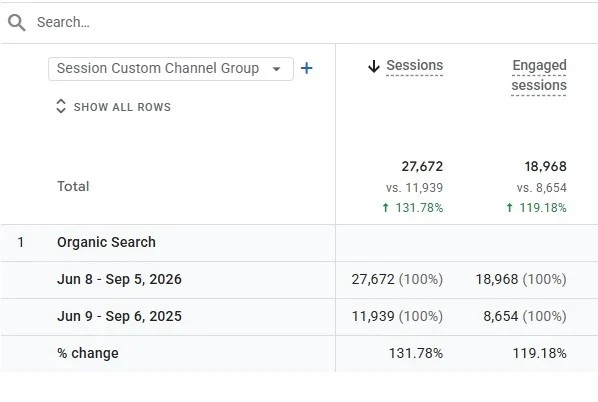
- GA4 organic search, Jun 8 – Sep 5, 2026 vs Jun 9 – Sep 6, 2025
- Clicks & position
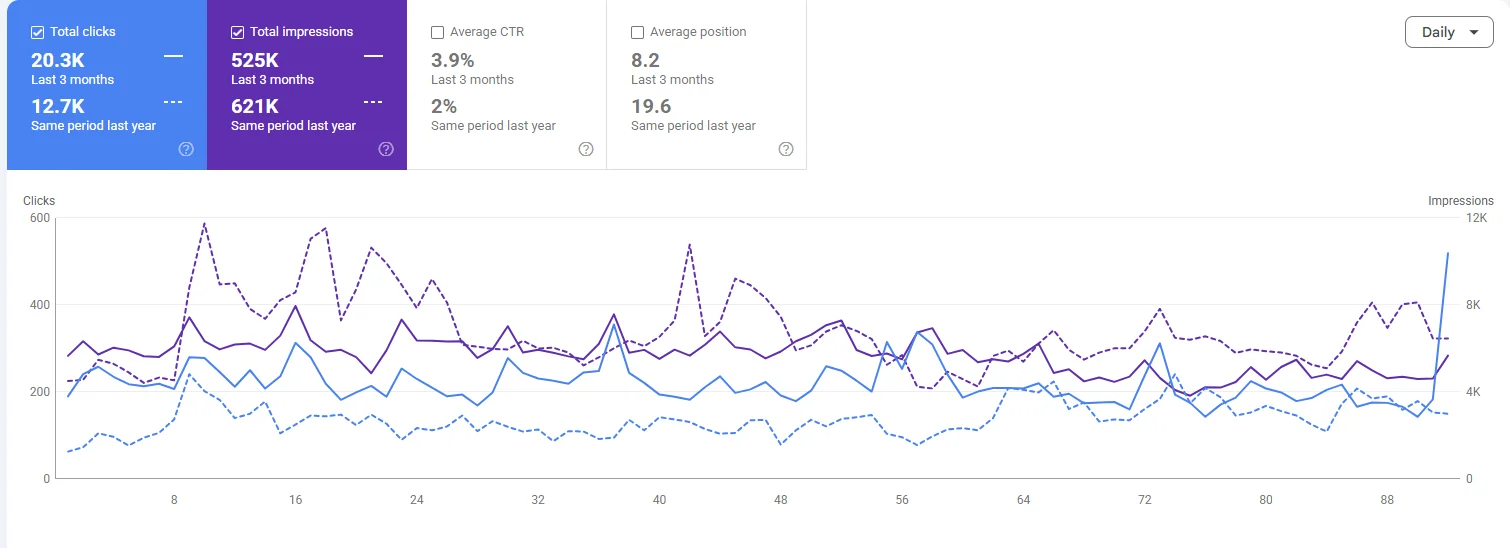
- Google Search Console, last 3 months vs the same period a year earlier
- Paid media
- Ran over the same period and contributed to organic growth; see the results below
- Source
- Google Search Console, top non-branded queries
- Comparison
- Last 3 months vs the same period a year earlier, as of October 2026
- Full size
- Select the image to view it full size
The challenge
The brand was growing faster than the website
The brand’s name recognition was outpacing what its website and marketing programs could support. People were looking for what the company builds, but the site wasn’t written in the words they searched, so a lot of that demand never reached it.
The in-house team was a single digital marketer plus the CEO, who brought in a fractional CMO. The CMO then built out SEO, content, design, development, and paid media support around them.
The approach
Owning search across the whole site
-
1
Brand voice, matched to search language
The terms buyers used most, like “camper vans” and “sprinter camper vans,” were also the most competitive. The strategy built on the identifiers that set the brand apart: off-grid capability, and prebuilt vans made possible by efficient production and minimal layouts, moving the messaging away from “custom.” That sharper angle helped the brand capture a bigger piece of those competitive searches.
-
2
Commercial page reoptimization
Reoptimized the homepage, each model page, and the inventory pages for vans for sale around that search language, highlighting the product differentiators and the features that support them.
-
3
A blog built on intent and real owner questions
Rebuilt the blog structure so every post had a defined search intent and a clear job to do. Topics came from where buyers and owners actually talk: Reddit threads and the brand’s Facebook owners group surfaced the questions and language they use. A gap analysis added keywords competitors owned that the brand could credibly write about too.
-
4
SEO governance: a protection layer for search
With design, development, and content each owning their own piece of the site, some search-critical work belonged to no one. SEO served as a protection layer for search, filling the gaps other departments didn’t officially own. That meant putting a site architecture foundation in place, making sure new pages and posts included internal links, and writing SOPs so content and development work followed SEO standards by default.
The results
More than twice the organic sessions, year over year
Organic search sessions more than doubled over the same three-month window, and engaged sessions grew almost as fast. Search Console shows the same shift: more clicks from fewer impressions, as click-through rate nearly doubled and average position moved from page two to page one.
To be fair about it: SEO wasn’t working alone. Paid media ran during the same period and drove a lot of the brand demand that showed up in organic search, especially branded searches. The non-branded clicks and head-term rankings below are the clearest measure of the SEO work on its own.
| Metric | Year before | Last 3 months | Change |
|---|---|---|---|
| Organic sessions (GA4) | 11,939 | 27,672 | +132% |
| Engaged organic sessions (GA4) | 8,654 | 18,968 | +119% |
| Clicks from Google, all queries | 12.7K | 20.3K | +60% |
| Impressions, all queries | 621K | 525K | −15% |
| Click-through rate | 2.0% | 3.9% | +1.9 pts |
| Average position | 19.6 | 8.2 | 11.4 spots higher |
| Non-branded clicks | 3.02K | 4.56K | +51% |
| Non-branded average position | 27 | 10.2 | 16.8 spots higher |
- Sessions
- GA4, Jun 8 – Sep 5, 2026 vs Jun 9 – Sep 6, 2025
- Search Console
- Last 3 months vs the same period a year earlier, as of October 2026
- Source
- GA4 organic search sessions and engaged sessions
- Comparison
- Jun 8 – Sep 5, 2026 vs Jun 9 – Sep 6, 2025
- Source
- Google Search Console, all queries
- Comparison
- Last 3 months (solid lines) vs the same period a year earlier (dashed), as of October 2026
- Full size
- Select the image to view it full size
From organic traffic to leads and closed deals
Organic hard leads and deals closed grew alongside organic traffic. Before the engagement, organic search closed one deal in six months. Over the last six months shown, it closed 41.
- Organic traffic
- GA4 organic sessions
- Leads & deals
- Organic only
- Timing
- Engagement started July 2025; paid media ran over the same period
View the numbers
| Month | Organic traffic | Hard leads | Deals closed |
|---|
Winning the competitive head terms
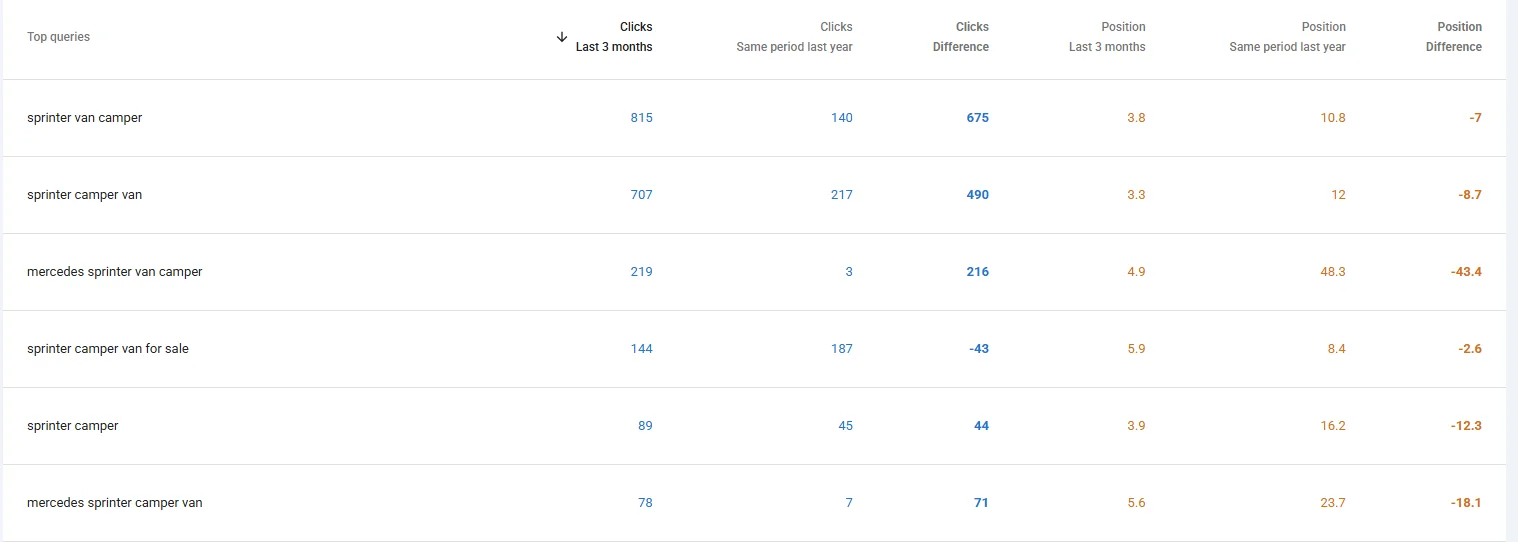
Non-branded search, where the competition was toughest, moved too, including the competitive head terms the brand had been up against.
| Head term | Position | Clicks |
|---|---|---|
| sprinter van camper | 10.8 → 3.8 | 140 → 815 |
| sprinter camper van | 12 → 3.3 | 217 → 707 |
| mercedes sprinter van camper | 48.3 → 4.9 | 3 → 219 |
- Source
- Google Search Console
- Comparison
- Last 3 months vs the same period a year earlier, as of October 2026
Blog posts that reached Google Discover
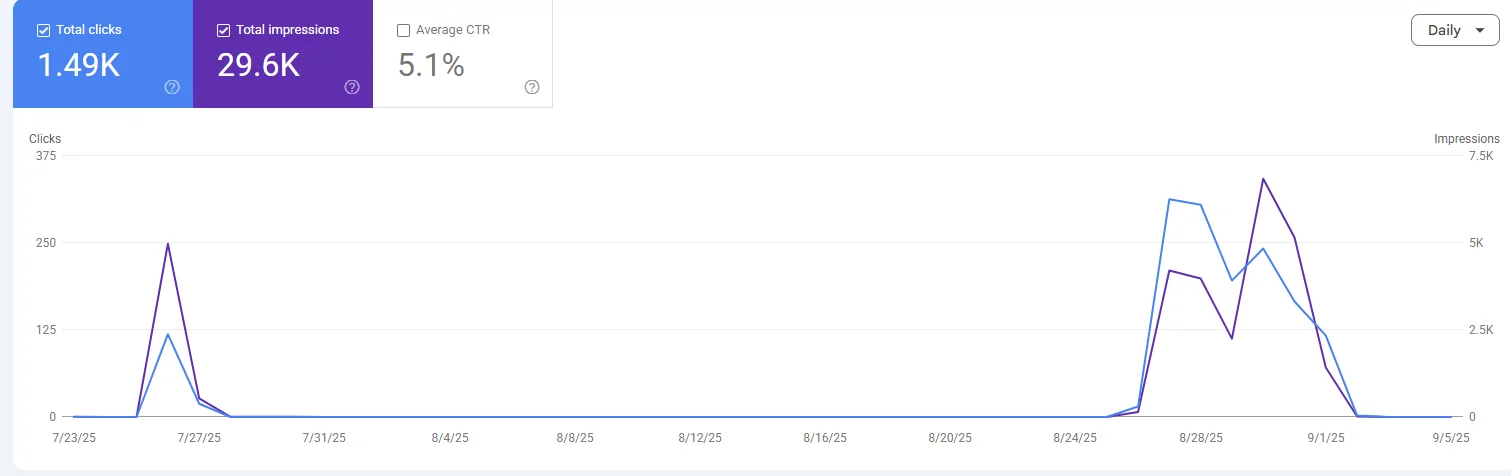
The blog work reached Google Discover too. A new post comparing AWD and 2WD vans, plus a reoptimized post on van life toilets, brought in 1.49K clicks from 29.6K Discover impressions, a 5.1% click-through rate, within the first two months of the engagement. Each post drove its own spike in the chart below: the toilet post in late July, the AWD vs 2WD post in late August.
- Source
- Google Search Console, Discover performance
- Dates
- Jul 23 – Sep 5, 2025
- Full size
- Select the image to view it full size
Cited in Google AI Overviews
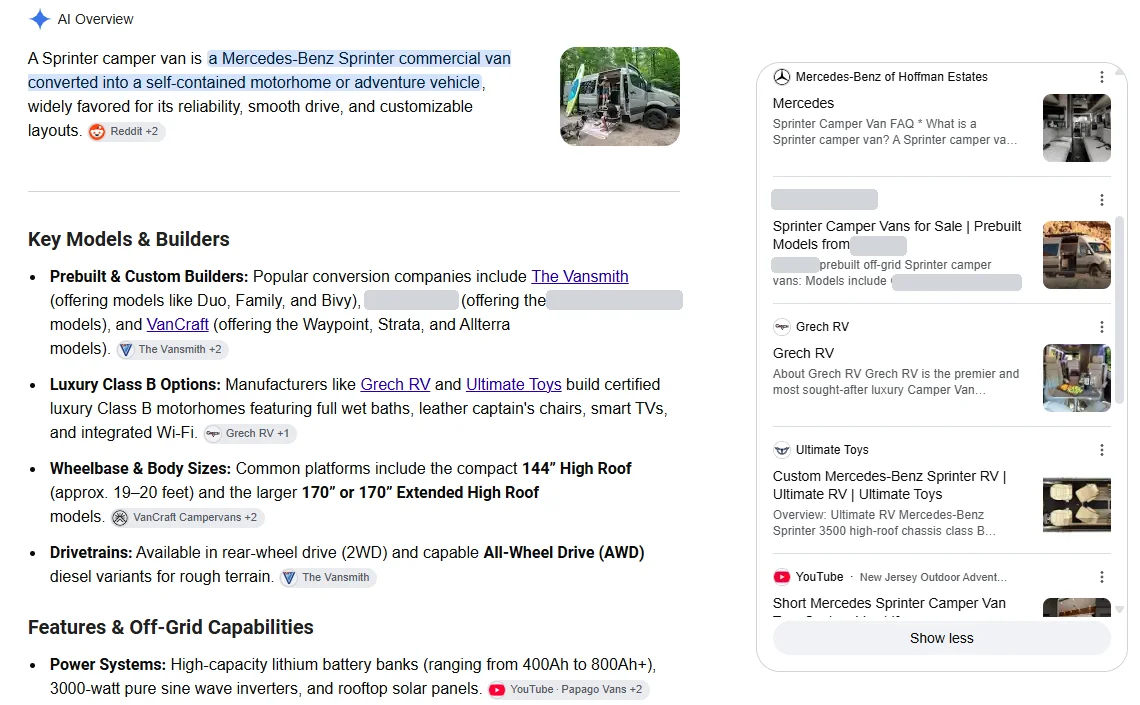
AI search picked up the new positioning as well. In Google’s AI Overview explaining Sprinter camper vans, the brand is listed among the key builders alongside its models, and its “Sprinter Camper Vans for Sale” page is cited as a source, described as “prebuilt off-grid Sprinter camper vans,” the same identifiers the repositioning was built on.
- Source
- Google AI Overview, captured October 2026
- Full size
- Select the image to view it full size
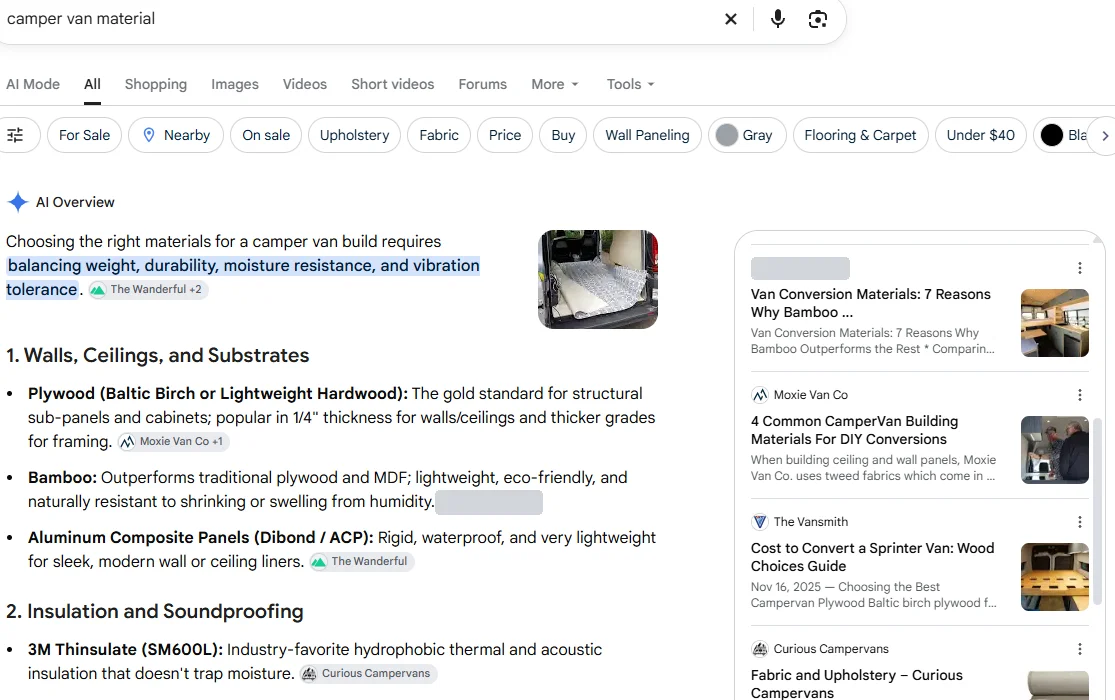
The blog shows up there too. For “camper van material,” the brand’s post on why bamboo outperforms other van conversion materials is cited as a source, and the overview’s bamboo recommendation is attributed to it.
- Source
- Google AI Overview for “camper van material,” captured October 2026
- Full size
- Select the image to view it full size
Let’s look at your site together